What I Have Learned
Mon
12
Jul
2010
Yet Another Do-It-Yourself Client Beats Capital One
We are happy to share this letter from one of our victorious DIY clients. When the documents we drafted for him showed Capital One that it could not win, it dismissed the case against him. O.D. gave us permission to use his full name. Thanks, O.D., we'll continue to honor your privacy, but we appreciate the email. Oh, and thanks for the bottles of wine!
Hello Adam,
Just a quick note to thank you and your team at the Fullman Firm for your relentless commitment/dedication towards resolving the lawsuit Capital One brought against me.
Your team has shown nothing but the highest level of professionalism from the moment I nervously requested your legal assistance, through the court document filing process and preparing/coaching
me for the actual court date which, thanks to you and your team, never materialized.
Words cannot express my sincere appreciation to you and your team. I would highly recommend your legal services to anyone facing a similar lawsuit.
"Two thumbs up and a high five" from a very satisfied and grateful client!
Sincerely,
O.D.
Sat
06
Mar
2010
ANOTHER DEBT SETTLEMENT “PROGRAM” VICTIM STORY
A woman called me yesterday for a consultation because a debt settlement “program” company (I call them DSCs) had overdrawn her bank account. This nice lady had no assets, bad credit, and poverty level income. However, the DSC had told her that bankruptcy was not the right option for her. Instead, they convinced her to start making automatic $425 per month payments toward a “settlement fund” and to pay the DSC three installments of $425 so they could start negotiating payments on her debts (these companies set up automatic withdrawals for these payments for their own benefit, not the consumer’s convenience). She called the DSC at the end of January to stop the February automatic withdrawal from her account because she had no money to cover it. However, she was told “oh, I’m sorry, you only gave us 6 days notice and we can’t stop the payment. She also tried to stop the March payment, but the DCS took it anyway. When she tried to cancel the service, she was told that, even though the DSC had only written ONE LETTER on her behalf, she still owed all three fee payments of $425. When I told her that when my firm sends a simple introductory letter to a debt collector our clients are only charged $16, she was shocked.
Thu
04
Mar
2010
WHY SOME DEBT SETTLEMENT “PROGRAMS” ARE A RIP OFF.
There is a difference between a debt settlement “program” and debt negotiation with The Fullman Firm. Here is how debt settlement “programs” typically work.
Step 1 of a debt settlement “program”: Sign a Long Term Contract which requires you to write a BIG FAT CHECK every month to your "settlement fund". Although the Debt Settlement Program (DSC) may not technically "own" this account, it has access to this account to withdraw funds for its fees.
Step 2 of a debt settlement “program”: Watch as the DSC takes ALL of the first three (3!) payments as part (that’s right, only “part”) of its fees. Meanwhile, three months have passed and you have not gotten any closer to settling your debts.
Step 3 of a debt settlement “program”: Keep making large monthly payments into your "settlement fund". Watch as every month the DSC skims additional fees off of YOUR money while waiting for you to accumulate enough for them to start work (this will take many more months but in the meantime the DSC has taken large fees from you up front and not actually settled any debts).
Step 4 of a debt settlement “program”: After the delays of the first three steps, the DSC (if it is not run by outright thieves) will now begin to contact your creditors and ask if they are willing to settle. The DSC is usually not run by real lawyers, there is no analysis of your situation under any consumer protection laws, and no action can be taken other than “begging” for a deal.
Step 4 of a debt settlement “program”: Finally (again, if the DSC is not run by outright thieves) some of your debts may be settled, and some of the deals may be good ones.
Step 5 of a debt settlement “program”: Some of your creditors will not offer good deals, and after many months of not getting paid, some of them will threaten a lawsuit. The DSC can’t address these threats with any real authority, because it usually is not a real law firm, so you are left on your own. In the meantime, any “installment” settlement agreements made by the DSC, will simply extend the statute of limitations and give the creditors more time to sue you in the future.
Step 6 of a debt settlement “program”: One or more creditors may actually sue you but, again, the DSC can’t or won’t defend you.
At The Fullman Firm, we negotiate with creditors on your behalf while applying decades of real courtroom experience to analyze your situation and look for any advantage over the creditors, including possible violations of consumer protection laws. You only pay us when we are actually working and we do not skim fees from your settlement funds. In fact, you hold onto your own money until we work a deal you agree to. Save your own money until you have enough for a discounted lump sum settlement that can wipe out the debt all at once. If a creditor does try to pursue legal action against you, you can ask us to defend you, which we can do as trial lawyers. Finally, if you decide to pursue the protection of the bankruptcy courts, we can assist you with that as well. We know bankruptcy is not your first option, but it is one of many options, and the point here is we can give you options that a DSC cannot.
Learn more at: http://www.fullmanfirm.com/our-services/debt-settlement/.
Thu
04
Mar
2010
Don't let them cheat you out of your "Fresh Start".
After you discharge a debt in chapter 7 bankruptcy, not only do you not owe the debt, but it is illegal for a creditor to continue to pursue the debt or to sell it to a debt collector. Reporting the debt on your credit report is a violation of the Fair Credit Reporting Act, and contacting you in pursuit of the debt is a violation of California’s Rosenthal Fair Debt Collection Practices Act. If you believe that a debt you have discharged in bankruptcy is being illegally pursued, contact a lawyer to learn more about your rights.
Sat
20
Feb
2010
Calling the Debt Collector's Bluff
We have all seen it on television or in the casino. A high stakes game of poker in which one of the players confidently bets a huge sum of money, striking fear into the hearts of the other competitors. These bets usually result in the other players folding their hands in order to avoid the risk. Yet sometimes there will be one player who will believe that the bettor does not have as good a hand as he would have the others believe. This player may "call" or perhaps even "raise" by betting even more money. Sometimes the first bettor wins, but sometimes he must admit he has been caught "bluffing".
As a result of the Fair Credit Reporting Act and Fair Debt Collections Practices Act work I do, I get several calls per week from people being sued by debt collectors for amounts varying from $5,000 to $100,000. Typically, these collectors have purchased the debt from the original creditor for pennies on the dollar and are looking to obtain a default judgment against the consumer in order to maximize their profit (default judgments are obtained when defendants - consumers- fail to properly defend themselves). Many times, the amount the consumers are being sued for is low enough that it does not make economic sense for the consumers to retain me to defend them. These consumers can avoid a default judgment by promptly contacting The Fullman Firm or another lawyer regarding unbundled services to assist them in representing themselves.
When consumers retain me to defend them against the claims of the debt collectors, I am consistently amazed at how ill prepared for litigation the debt collectors are. Many of them do not have the evidence to prove their case or fend off an affirmative defense. They are caught "bluffing."
Many of these companies purchase hundreds of debts at a time. They do not review each claim individually. Therefore, if their file is missing important information or documentation, they will often not know about the problem until they are challenged in formal litigation.
Litigation offers the consumer a unique opportunity to "call the bluff". The burden of proof on the creditor is very low when the creditor is merely destroying the consumer's credit rating by way of statements to a credit reporting agency. In litigation the burden on the creditor to affirmatively prove its case is much higher and often it simply cannot meet that burden. Here is an example from a recent case in my office.
My client (let's call him "Bob") was sued by a debt collection agency that claimed to have purchased a debt of $100,000 from a bank. Bob insisted that he had not had any dealing with the bank in for over four years before the lawsuit was filed. Therefore, I answered the complaint on his behalf and asserted a "statute of limitations" defense. I then immediately sent out discovery demands designed to learn whether the opposing party had any proof either of the alleged debt or regarding our defenses. The attorney for the debt collector was forced to admit that the bank had failed to give the debt collector a complete file when it had purchased the debt and that the debt collector could not prove its case. The debt collector agreed to dismiss the case and Bob did not have to pay a single dime to the other side.*
*Your results may vary. All cases are unique and these results are not an indication of the likelihood of success of your case. This generalized example is for informational purposes only and "Bob" is a composite character made up of several other clients.
Thu
18
Feb
2010
Personal Liability For Business Debts
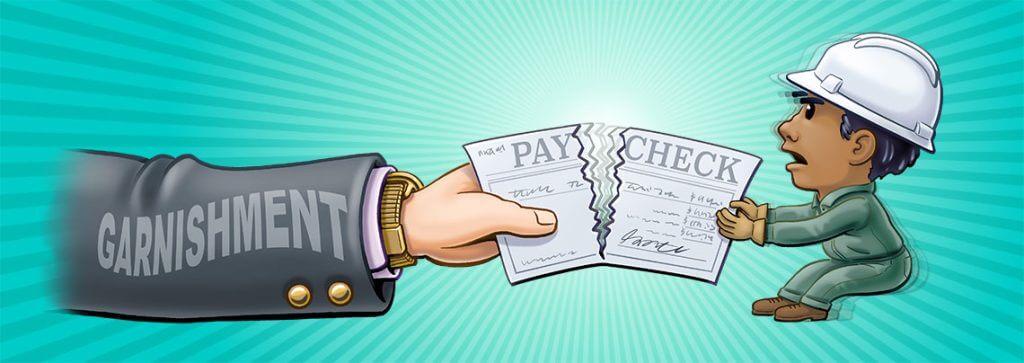
One of the things that interested me as I listened to a seminar for debt collections attorneys recently is that the speaker admitted she would personally sue the individual who signed the contract for the business debt even if it was clear that the person was only signing on behalf of the company. She knows that most people don't defend themselves and she will get a judgment against them even though she should not. She knows that once she gets the judgment, she can pressure the individual into paying the company's debt by threatening to garnish his wages or attach his bank accounts. You can stop this from happening to you by calling a lawyer and asking about your rights.
Wed
17
Feb
2010
Evil Debt Collector Masterminds at Work
I’ve been listening to this online seminar in which the speaker is a debt collection attorney in Los Angeles. It’s like listening in on a meeting between Darth Vader and those storm troopers in the red uniforms. At one point she actually laughs as she says “Garnishments! I loooove wage garnishments!” The whole point of the seminar seems to be how to use the legal system to scare people into paying because they are afraid of exercising their right to defend themselves in court. Do not let them get away with this! Call us or another consumer law firm and get some help!
Mon
15
Feb
2010
What Can I Keep if I File Bankruptcy in California?
One of the most important questions our clients ask us is what they will be allowed to keep if they file a Chapter 7 bankruptcy. The short answer is "suprisingly, quite a lot, and often everything." We call the assets you are allowed to keep "Exemptions". California has its own list of Exemptions. Here is a list straight from the California Civil Code.
http://www.fullmanfirm.com/what-i-have-learned/what-can-i-keep-in-ch-7-bk/
Sun
14
Feb
2010
Making a small payment to a debt collector does nothing but keep you on the hook.
I can’t count how many times I have reviewed a client’s file with the hope that the old debts I saw were beyond the statute of limitations for a collection lawsuit only to learn that my client had “reaffirmed” the debt and restarted the limitations period by making a small payment within the last four years. The client’s story is usually something like this “I don’t understand why they are suing me. I’ve been making small payments, but now they want more.” The problem was that my client confused the debt collector with a human being. My client’s theory was that if he could just convince the collector of his sincerity, the collector would “understand” and give him more time to make more payments. My client forgot one thing: “THE DEBT COLLECTOR IS NOT YOUR FRIEND – HE IS YOUR ENEMY! Making an installment payment to a debt collector not only restarts the statute of limitations, it gives him your bank account number, making it easier to levy your bank account after he sues you. It’s like hoping the burglar will not break in to your house if you give him the key to your front door! If you don’t have enough cash to pay off the debt then tell the debt collector to go jump in a lake and keeping telling him that until you can make a settlement offer to wipe out the balance (for a discount, of course, no one is paying full value in this economy).
Thu
11
Feb
2010
Statute of Limitations and Under Payments on Credit Cards
The following is a letter written (with some "ghost writing" by us) by one of our "Do It Yourself" clients who is defending himself in a lawsuit on a credit card debt. Keep in mind all the law referenced is for California only.
The billing statements Capital One has produced show that the statute of limitations on plaintiff’s cause of action began to run on August 1, 2005. The statements show that I failed to make the required minimum payment which was due on August 1, 2005. Instead I only paid $50. I did this again on September 1, 2005. Thereafter, I made no payments whatsoever. The contract plaintiff produced states under “Default” that we [plaintiff] may, in our sole discretion, declare a default under this agreement if (a) we do not receive the full amount of any minimum payment on or before the date it is due.” In the current case plaintiff assessed both a late payment fee and an over limit fee each time when I failed to pay the minimum amount due on August 1, 2005 and again on September 1, 2005. Because the contract gave plaintiff the right to declare a default at that time, plaintiff’s cause of action for this lawsuit arose at that time. It does not matter that Plaintiff may not have “declared” the breach. Plaintiff’s own evidence is that I have failed to perform under the contract commencing August 1, 2005 and have continued to fail to perform.
I have discussed this matter with a consumer debt lawyer. He tells me that pursuing this action even though the statute of limitations has expired is a violation of the Rosenthal Act. He is willing to file my cross-complaint against you on a contingency fee basis, but he advises me to first offer to settle this matter with plaintiff in the form of a “walk away agreement” in which plaintiff and I would waive current rights of action against each other with the exchange of no money and each party to pay its own costs and fees. I am willing to discuss this with you. Please respond in writing.
Mon
08
Feb
2010
Deal with a Debt Collector or Deal with the Devil?
A client (nice lady, very sweet, very upset) calls me and says that she is being harassed by a debt collector (I promise to name them as soon as the case is closed). Her story is common. She had been contacted two years ago by a debt collection company claiming that she owed thousands of dollars for an old debt. Whether or not she owed the money was not important, the company threatened a lawsuit and she had not met me yet so she did not know how to defend herself. She agreed to a stipulated judgment with the creditor which included monthly payments until the claim was paid off. Now, like any agreement, a stipulated judgment can be a useful tool to resolving a dispute, but in this case (and in many cases in the world of debt collection) it was a lopsided deal reminiscent of Faust. Long story short, the deal contained a harsh term that purportedly allowed the debt collector at any time in the future to simply decide the deal was not good enough and then demand higher payments. Now, I have read the stipulated judgment and I don’t think such a lopsided deal is even enforceable in court (something called an illusory promise comes into play – ask your nephew the first year law student about it). Unfortunately, my client did not know that. So, when the debt collector called her one year into the deal and demanded an immediate payment of ten times the monthly installment, she gave in. However, six months later the collector called her again and this time a payment of twenty times the monthly payment was demanded. That’s when she called me. The collector is in violation of California’s Rosenthal Fair Debt Collection Practices Act, and as one of my mentors used to say, “we are on them like a bird on a june bug.” This one should be fun.
Fri
29
Jan
2010
Think twice before you pay off that old cell phone bill.
Federal Law sets the statute of limitations for cell phone bills (the last day you can be sued for the debt) at 2 years. That means, with certain exceptions, any threat of lawsuit by that annoying debt collector over an ancient cell phone bill may be nothing more than smoke and mirrors. There is a disagreement between some judges on how to apply this rule, so ask a lawyer (like me) for more details.
Fri
29
Jan
2010
Getting Good People out of a Jam Feels Good.
Here is the story of TB, one of our Do It Yourself clients, in her own words. She found us through our sister company, Lexington Law Firm California.
"One day I received a summons at my door, I was being sued! I immediately called Lexington Law as I had no idea what to do, I was in a state of panic, but within minutes I was relieved. The paralegal gave me Adam Fullman’s number and by the end of the day after Adam Fullman and I talked, it was decided I was going to fight this case out with Adam’s help… Adam was very straight forward, gave awesome direction, and stayed with me the entire way and guess what, I WON!!!! After being with Lexington Law for six months they improved my credit score by 70 points. They worked with all 3 credit bureaus and removed numerous accounts off of my credit report from judgments, to late payments, and collection accounts and let’s not forget to mention helping me with yet another judgment trying to be placed on my record. I couldn’t thank Adam Fullman and his team enough for what they did for me and what they taught me about my credit report/score. I was so happy with my results that anytime anyone has issues with their credit score and/or report I always tell them about Lexington Law because they helped me in ways I didn’t think was possible."
TB, Mountain View, CA
Your results may vary. All cases are unique and these results are not an indication of the likelihood of success of your case.
Mon
12
Jul
2010
Yet Another Do-It-Yourself Client Beats Capital One
We are happy to share this letter from one of our victorious DIY clients. When the documents we drafted for him showed Capital One that it could not win, it dismissed the case against him. O.D. gave us permission to use his full name. Thanks, O.D., we'll continue to honor your privacy, but we appreciate the email. Oh, and thanks for the bottles of wine!
Hello Adam,
Just a quick note to thank you and your team at the Fullman Firm for your relentless commitment/dedication towards resolving the lawsuit Capital One brought against me.
Your team has shown nothing but the highest level of professionalism from the moment I nervously requested your legal assistance, through the court document filing process and preparing/coaching
me for the actual court date which, thanks to you and your team, never materialized.
Words cannot express my sincere appreciation to you and your team. I would highly recommend your legal services to anyone facing a similar lawsuit.
"Two thumbs up and a high five" from a very satisfied and grateful client!
Sincerely,
O.D.
Sat
06
Mar
2010
ANOTHER DEBT SETTLEMENT “PROGRAM” VICTIM STORY
A woman called me yesterday for a consultation because a debt settlement “program” company (I call them DSCs) had overdrawn her bank account. This nice lady had no assets, bad credit, and poverty level income. However, the DSC had told her that bankruptcy was not the right option for her. Instead, they convinced her to start making automatic $425 per month payments toward a “settlement fund” and to pay the DSC three installments of $425 so they could start negotiating payments on her debts (these companies set up automatic withdrawals for these payments for their own benefit, not the consumer’s convenience). She called the DSC at the end of January to stop the February automatic withdrawal from her account because she had no money to cover it. However, she was told “oh, I’m sorry, you only gave us 6 days notice and we can’t stop the payment. She also tried to stop the March payment, but the DCS took it anyway. When she tried to cancel the service, she was told that, even though the DSC had only written ONE LETTER on her behalf, she still owed all three fee payments of $425. When I told her that when my firm sends a simple introductory letter to a debt collector our clients are only charged $16, she was shocked.
Thu
04
Mar
2010
WHY SOME DEBT SETTLEMENT “PROGRAMS” ARE A RIP OFF.
There is a difference between a debt settlement “program” and debt negotiation with The Fullman Firm. Here is how debt settlement “programs” typically work.
Step 1 of a debt settlement “program”: Sign a Long Term Contract which requires you to write a BIG FAT CHECK every month to your "settlement fund". Although the Debt Settlement Program (DSC) may not technically "own" this account, it has access to this account to withdraw funds for its fees.
Step 2 of a debt settlement “program”: Watch as the DSC takes ALL of the first three (3!) payments as part (that’s right, only “part”) of its fees. Meanwhile, three months have passed and you have not gotten any closer to settling your debts.
Step 3 of a debt settlement “program”: Keep making large monthly payments into your "settlement fund". Watch as every month the DSC skims additional fees off of YOUR money while waiting for you to accumulate enough for them to start work (this will take many more months but in the meantime the DSC has taken large fees from you up front and not actually settled any debts).
Step 4 of a debt settlement “program”: After the delays of the first three steps, the DSC (if it is not run by outright thieves) will now begin to contact your creditors and ask if they are willing to settle. The DSC is usually not run by real lawyers, there is no analysis of your situation under any consumer protection laws, and no action can be taken other than “begging” for a deal.
Step 4 of a debt settlement “program”: Finally (again, if the DSC is not run by outright thieves) some of your debts may be settled, and some of the deals may be good ones.
Step 5 of a debt settlement “program”: Some of your creditors will not offer good deals, and after many months of not getting paid, some of them will threaten a lawsuit. The DSC can’t address these threats with any real authority, because it usually is not a real law firm, so you are left on your own. In the meantime, any “installment” settlement agreements made by the DSC, will simply extend the statute of limitations and give the creditors more time to sue you in the future.
Step 6 of a debt settlement “program”: One or more creditors may actually sue you but, again, the DSC can’t or won’t defend you.
At The Fullman Firm, we negotiate with creditors on your behalf while applying decades of real courtroom experience to analyze your situation and look for any advantage over the creditors, including possible violations of consumer protection laws. You only pay us when we are actually working and we do not skim fees from your settlement funds. In fact, you hold onto your own money until we work a deal you agree to. Save your own money until you have enough for a discounted lump sum settlement that can wipe out the debt all at once. If a creditor does try to pursue legal action against you, you can ask us to defend you, which we can do as trial lawyers. Finally, if you decide to pursue the protection of the bankruptcy courts, we can assist you with that as well. We know bankruptcy is not your first option, but it is one of many options, and the point here is we can give you options that a DSC cannot.
Learn more at: http://www.fullmanfirm.com/our-services/debt-settlement/.
Thu
04
Mar
2010
Don't let them cheat you out of your "Fresh Start".
After you discharge a debt in chapter 7 bankruptcy, not only do you not owe the debt, but it is illegal for a creditor to continue to pursue the debt or to sell it to a debt collector. Reporting the debt on your credit report is a violation of the Fair Credit Reporting Act, and contacting you in pursuit of the debt is a violation of California’s Rosenthal Fair Debt Collection Practices Act. If you believe that a debt you have discharged in bankruptcy is being illegally pursued, contact a lawyer to learn more about your rights.
Sat
20
Feb
2010
Calling the Debt Collector's Bluff
We have all seen it on television or in the casino. A high stakes game of poker in which one of the players confidently bets a huge sum of money, striking fear into the hearts of the other competitors. These bets usually result in the other players folding their hands in order to avoid the risk. Yet sometimes there will be one player who will believe that the bettor does not have as good a hand as he would have the others believe. This player may "call" or perhaps even "raise" by betting even more money. Sometimes the first bettor wins, but sometimes he must admit he has been caught "bluffing".
As a result of the Fair Credit Reporting Act and Fair Debt Collections Practices Act work I do, I get several calls per week from people being sued by debt collectors for amounts varying from $5,000 to $100,000. Typically, these collectors have purchased the debt from the original creditor for pennies on the dollar and are looking to obtain a default judgment against the consumer in order to maximize their profit (default judgments are obtained when defendants - consumers- fail to properly defend themselves). Many times, the amount the consumers are being sued for is low enough that it does not make economic sense for the consumers to retain me to defend them. These consumers can avoid a default judgment by promptly contacting The Fullman Firm or another lawyer regarding unbundled services to assist them in representing themselves.
When consumers retain me to defend them against the claims of the debt collectors, I am consistently amazed at how ill prepared for litigation the debt collectors are. Many of them do not have the evidence to prove their case or fend off an affirmative defense. They are caught "bluffing."
Many of these companies purchase hundreds of debts at a time. They do not review each claim individually. Therefore, if their file is missing important information or documentation, they will often not know about the problem until they are challenged in formal litigation.
Litigation offers the consumer a unique opportunity to "call the bluff". The burden of proof on the creditor is very low when the creditor is merely destroying the consumer's credit rating by way of statements to a credit reporting agency. In litigation the burden on the creditor to affirmatively prove its case is much higher and often it simply cannot meet that burden. Here is an example from a recent case in my office.
My client (let's call him "Bob") was sued by a debt collection agency that claimed to have purchased a debt of $100,000 from a bank. Bob insisted that he had not had any dealing with the bank in for over four years before the lawsuit was filed. Therefore, I answered the complaint on his behalf and asserted a "statute of limitations" defense. I then immediately sent out discovery demands designed to learn whether the opposing party had any proof either of the alleged debt or regarding our defenses. The attorney for the debt collector was forced to admit that the bank had failed to give the debt collector a complete file when it had purchased the debt and that the debt collector could not prove its case. The debt collector agreed to dismiss the case and Bob did not have to pay a single dime to the other side.*
*Your results may vary. All cases are unique and these results are not an indication of the likelihood of success of your case. This generalized example is for informational purposes only and "Bob" is a composite character made up of several other clients.
Thu
18
Feb
2010
Personal Liability For Business Debts
One of the things that interested me as I listened to a seminar for debt collections attorneys recently is that the speaker admitted she would personally sue the individual who signed the contract for the business debt even if it was clear that the person was only signing on behalf of the company. She knows that most people don't defend themselves and she will get a judgment against them even though she should not. She knows that once she gets the judgment, she can pressure the individual into paying the company's debt by threatening to garnish his wages or attach his bank accounts. You can stop this from happening to you by calling a lawyer and asking about your rights.
Wed
17
Feb
2010
Evil Debt Collector Masterminds at Work
I’ve been listening to this online seminar in which the speaker is a debt collection attorney in Los Angeles. It’s like listening in on a meeting between Darth Vader and those storm troopers in the red uniforms. At one point she actually laughs as she says “Garnishments! I loooove wage garnishments!” The whole point of the seminar seems to be how to use the legal system to scare people into paying because they are afraid of exercising their right to defend themselves in court. Do not let them get away with this! Call us or another consumer law firm and get some help!
Mon
15
Feb
2010
What Can I Keep if I File Bankruptcy in California?
One of the most important questions our clients ask us is what they will be allowed to keep if they file a Chapter 7 bankruptcy. The short answer is "suprisingly, quite a lot, and often everything." We call the assets you are allowed to keep "Exemptions". California has its own list of Exemptions. Here is a list straight from the California Civil Code.
http://www.fullmanfirm.com/what-i-have-learned/what-can-i-keep-in-ch-7-bk/
Sun
14
Feb
2010
Making a small payment to a debt collector does nothing but keep you on the hook.
I can’t count how many times I have reviewed a client’s file with the hope that the old debts I saw were beyond the statute of limitations for a collection lawsuit only to learn that my client had “reaffirmed” the debt and restarted the limitations period by making a small payment within the last four years. The client’s story is usually something like this “I don’t understand why they are suing me. I’ve been making small payments, but now they want more.” The problem was that my client confused the debt collector with a human being. My client’s theory was that if he could just convince the collector of his sincerity, the collector would “understand” and give him more time to make more payments. My client forgot one thing: “THE DEBT COLLECTOR IS NOT YOUR FRIEND – HE IS YOUR ENEMY! Making an installment payment to a debt collector not only restarts the statute of limitations, it gives him your bank account number, making it easier to levy your bank account after he sues you. It’s like hoping the burglar will not break in to your house if you give him the key to your front door! If you don’t have enough cash to pay off the debt then tell the debt collector to go jump in a lake and keeping telling him that until you can make a settlement offer to wipe out the balance (for a discount, of course, no one is paying full value in this economy).
Thu
11
Feb
2010
Statute of Limitations and Under Payments on Credit Cards
The following is a letter written (with some "ghost writing" by us) by one of our "Do It Yourself" clients who is defending himself in a lawsuit on a credit card debt. Keep in mind all the law referenced is for California only.
The billing statements Capital One has produced show that the statute of limitations on plaintiff’s cause of action began to run on August 1, 2005. The statements show that I failed to make the required minimum payment which was due on August 1, 2005. Instead I only paid $50. I did this again on September 1, 2005. Thereafter, I made no payments whatsoever. The contract plaintiff produced states under “Default” that we [plaintiff] may, in our sole discretion, declare a default under this agreement if (a) we do not receive the full amount of any minimum payment on or before the date it is due.” In the current case plaintiff assessed both a late payment fee and an over limit fee each time when I failed to pay the minimum amount due on August 1, 2005 and again on September 1, 2005. Because the contract gave plaintiff the right to declare a default at that time, plaintiff’s cause of action for this lawsuit arose at that time. It does not matter that Plaintiff may not have “declared” the breach. Plaintiff’s own evidence is that I have failed to perform under the contract commencing August 1, 2005 and have continued to fail to perform.
I have discussed this matter with a consumer debt lawyer. He tells me that pursuing this action even though the statute of limitations has expired is a violation of the Rosenthal Act. He is willing to file my cross-complaint against you on a contingency fee basis, but he advises me to first offer to settle this matter with plaintiff in the form of a “walk away agreement” in which plaintiff and I would waive current rights of action against each other with the exchange of no money and each party to pay its own costs and fees. I am willing to discuss this with you. Please respond in writing.
Mon
08
Feb
2010
Deal with a Debt Collector or Deal with the Devil?
A client (nice lady, very sweet, very upset) calls me and says that she is being harassed by a debt collector (I promise to name them as soon as the case is closed). Her story is common. She had been contacted two years ago by a debt collection company claiming that she owed thousands of dollars for an old debt. Whether or not she owed the money was not important, the company threatened a lawsuit and she had not met me yet so she did not know how to defend herself. She agreed to a stipulated judgment with the creditor which included monthly payments until the claim was paid off. Now, like any agreement, a stipulated judgment can be a useful tool to resolving a dispute, but in this case (and in many cases in the world of debt collection) it was a lopsided deal reminiscent of Faust. Long story short, the deal contained a harsh term that purportedly allowed the debt collector at any time in the future to simply decide the deal was not good enough and then demand higher payments. Now, I have read the stipulated judgment and I don’t think such a lopsided deal is even enforceable in court (something called an illusory promise comes into play – ask your nephew the first year law student about it). Unfortunately, my client did not know that. So, when the debt collector called her one year into the deal and demanded an immediate payment of ten times the monthly installment, she gave in. However, six months later the collector called her again and this time a payment of twenty times the monthly payment was demanded. That’s when she called me. The collector is in violation of California’s Rosenthal Fair Debt Collection Practices Act, and as one of my mentors used to say, “we are on them like a bird on a june bug.” This one should be fun.
Fri
29
Jan
2010
Think twice before you pay off that old cell phone bill.
Federal Law sets the statute of limitations for cell phone bills (the last day you can be sued for the debt) at 2 years. That means, with certain exceptions, any threat of lawsuit by that annoying debt collector over an ancient cell phone bill may be nothing more than smoke and mirrors. There is a disagreement between some judges on how to apply this rule, so ask a lawyer (like me) for more details.
Fri
29
Jan
2010
Getting Good People out of a Jam Feels Good.
Here is the story of TB, one of our Do It Yourself clients, in her own words. She found us through our sister company, Lexington Law Firm California.
"One day I received a summons at my door, I was being sued! I immediately called Lexington Law as I had no idea what to do, I was in a state of panic, but within minutes I was relieved. The paralegal gave me Adam Fullman’s number and by the end of the day after Adam Fullman and I talked, it was decided I was going to fight this case out with Adam’s help… Adam was very straight forward, gave awesome direction, and stayed with me the entire way and guess what, I WON!!!! After being with Lexington Law for six months they improved my credit score by 70 points. They worked with all 3 credit bureaus and removed numerous accounts off of my credit report from judgments, to late payments, and collection accounts and let’s not forget to mention helping me with yet another judgment trying to be placed on my record. I couldn’t thank Adam Fullman and his team enough for what they did for me and what they taught me about my credit report/score. I was so happy with my results that anytime anyone has issues with their credit score and/or report I always tell them about Lexington Law because they helped me in ways I didn’t think was possible."
TB, Mountain View, CA
Your results may vary. All cases are unique and these results are not an indication of the likelihood of success of your case.