
Los Angeles County Debt Negotiation Attorneys
Negotiating and Defending Debt Lawsuits Filed in Los Angeles County
The Fullman Firm represents Los Angeles County residents who have been served with a summons and complaint by a creditor or debt buyer, or who have received an intent-to-sue letter from a law firm representing the creditor. Our Los Angeles County debt lawsuit attorneys file the response the court requires, test whether the creditor can prove its claim, and negotiate to close the case for less than the amount demanded. We charge a small flat fee, only earn a profit if we save you money, and offer a free consultation.

Why Los Angeles County Clients Choose The Fullman Firm
Getting an intent-to-sue letter from a law firm representing a creditor, or being served with a summons and complaint, can leave you unsure how much you owe and how quickly you need to act. The Fullman Firm offers a way to examine the claim, respond to the case, and consider a resolution that fits your circumstances:
- Predictable fees. A flat fee set before we start, so you know the cost up front.
- Room to discuss your options. A free consultation, payment plans, and legal-fee financing through LawPay’s Pay Later program (formerly ClientCredit), powered by Affirm.
- Experience with major debt buyers. Published results involving Midland Credit Management, Velocity Investments, and LVNV Funding. Prior case results are not a guarantee of future outcomes.
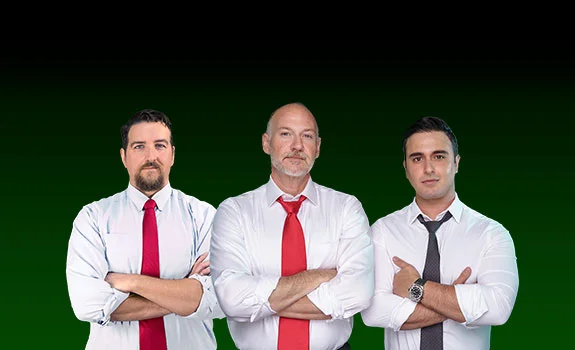
- An experienced legal team. More than 40 years of combined experience.
- Representation across California. Debt-lawsuit defense for clients throughout the state, including Los Angeles County, from our offices in Santa Ana and Elk Grove.
The amount a creditor demands is not necessarily the amount it can prove or the amount needed to resolve the case. Understanding the claim and the available options can make the next step feel less uncertain.
Debt Lawsuits We Handle in Los Angeles County
A debt lawsuit can look different depending on who filed it and how far the case has progressed. We help clients facing claims from original lenders and debt buyers, as well as people who first learn of a case after a default judgment.
Credit Card and Personal Loan Lawsuits
Banks and lenders sue on unpaid credit cards and personal loans. We file your response, review the creditor’s records, and start negotiating with its attorneys early.
Debt Buyer Lawsuits
A debt buyer is a company in the business of buying charged-off consumer accounts, meaning accounts a creditor removed from its books and treated as a loss. For accounts sold on or after January 1, 2014, California law requires its complaint to state that it is the sole owner of the debt or has authority to assert the rights of every owner. The complaint must also state the balance at charge-off, the date of default or last payment, and every company that bought the account after charge-off, and it must attach a copy of the contract or other qualifying document. We check each required item against your papers and raise every gap.
Our published results from cases across California include an $18,185 Midland Credit Management claim dismissed in November 2025 and a $22,438.88 LVNV Funding claim dismissed in October 2025. Each result depended on the facts of that case, and results will differ if based on different facts. Prior results do not guarantee a similar outcome.
Cases That Already Ended in a Default Judgment
Some people learn of a creditor’s summons and complaint only after a judgment. Our default judgment attorneys handle that stage.
How a Debt Lawsuit Moves Through the Los Angeles County Courts
A California summons tells you to file a written response with the court within 30 days after it is served on you. If the papers were left with someone else at your home or work and then mailed to you, service is not complete until 10 days after the mailing.
If you do not respond, the court can decide the case without you, called a default, and the creditor can ask for everything the complaint demands. A default judgment can lead to garnished wages or the taking of money or property.
For a credit card or consumer loan account, state law makes the proper county the one where you signed the contract, where you lived when you signed it, or where you live when the case is filed. The proper courthouse is the one nearest or most accessible to one of those places, and a clause in a card agreement that waives this rule is void.


Under the state court rules, a collections case is a lawsuit to collect a fixed sum of $35,000 or less, excluding interest and attorney fees, on something bought or borrowed on credit. Los Angeles County adds a local step. Under the Los Angeles court’s local filing rules, every limited collections case must be filed at a designated courthouse chosen by the zip code of the place that makes the county proper, such as where you live. The creditor must also file a Civil Case Cover Sheet Addendum and Statement of Location (form LACIV 109) and serve a copy with the summons and complaint.
These rules give you three things to check:
- The county. The creditor must state facts under oath showing it filed in the proper court and courthouse.
- The courthouse. The court transfers a case filed at the wrong location, acting by itself or at your request.
- Your consent. In a credit card or consumer loan case, only a defendant who has a lawyer can agree to keep a case at the wrong location.
A lawsuit may arrive with a courthouse already assigned, but that does not mean every filing detail, or the creditor’s claim, is beyond question. A timely response gives you the chance to examine what the creditor claims you owe and what evidence supports it.
Negotiating After the Lawsuit Is Filed
A filed lawsuit does not take settlement off the table, but we don’t negotiate just for the sake of paying a debt either. We first evaluate and challenge every debt collection lawsuit to determine whether defenses, service problems, gaps in the creditor’s evidence, or other grounds exist to defeat or dismiss the case. That review covers the creditor’s claim, the account history, and whether the deadline to sue has passed. Old credit card debt is a common example. Debt lawsuits usually rest on claims for breach of a written contract, an account stated, or an open book account, and California generally allows four years to file each of them. Once that deadline has passed, state law says no one may sue to collect the debt, so a lawsuit filed late may be defeated on that ground.
Responding to the complaint can preserve your opportunity to contest the claim while negotiations continue. In most California debt lawsuits, you have 30 days after being served to file a response. The California courts’ guidance notes that responding may give you more time to negotiate and a stronger negotiating position. The response also requires the creditor to prove its case rather than obtain a default because you did not respond.
If you reach an agreement, the lawsuit still needs a clear ending. Paying a negotiated amount does not automatically dismiss the case, so the written terms should address when the creditor will file a dismissal.
Frequently Asked Questions
Can I still negotiate after I have been served in Los Angeles County?
Yes. State court guidance says you may still be able to negotiate, often for less than the full amount. Your 30-day response deadline keeps running while you talk, unless the creditor agrees to a written 15-day extension.
Why was my case filed at a courthouse far from where I live?
For a credit card or consumer loan account, the proper courthouse can be the one nearest or most accessible to where you signed, where you lived when you signed, or where you live now. Within Los Angeles County, a motion to move a civil case to a different district is heard by a designated department in the Central District, at the Stanley Mosk Courthouse downtown.
Does paying the agreed amount end the lawsuit?
Not by itself. The creditor has to file a dismissal. Court rules generally give it 45 days after a completed settlement, or the date set in the agreement for a settlement paid over time, so the written agreement should say when. If the creditor is a debt buyer, California law also requires the settlement to be in writing or stated in open court.
Talk to a Los Angeles County Debt Lawsuit Attorney Today
If you have been served with a summons and complaint, your 30-day response deadline is already running. If a law firm representing a creditor has sent you an intent-to-sue letter, talk with us before the lawsuit is filed. Request your free consultation and The Fullman Firm will review your papers, confirm your deadline, and explain your options.



 Google
 Yelp
 Trustindex


